A rare disease
What is Pulmonary Arterial Hypertension?
Pulmonary Arterial Hypertension (PAH) is a rare, progressive, and life-threatening disease that affects the blood vessels in the lungs. In PAH, the small arteries that carry blood from the heart to the lungs gradually become narrowed and stiff. This makes it harder for blood to flow through the lungs, increasing pressure in the pulmonary circulation. Over time, this increased pressure forces the right side of the heart to work harder. If the disease progresses, it can lead to right heart failure.

What happens in the body?
PAH is more than temporary narrowing of blood vessels. It involves long-term structural changes in the vessel walls — a process often described as vascular remodeling.
These changes may include:
- Thickening of the vessel walls
- Reduced elasticity
- Scarring
- Ongoing inflammation
As these changes develop, resistance to blood flow increases and the heart becomes progressively strained.

How PAH affects daily life
Symptoms often develop gradually and may include:
- Shortness of breath
- Fatigue
- Chest discomfort
- Dizziness or fainting
- Swelling in the legs
As the disease progresses, even simple activities can become physically demanding. Many people living with PAH experience limitations that affect work, independence, and quality of life.
Understanding these underlying changes is central to advancing new treatment approaches.
Living with PAH

Behind every clinical statistic is a person navigating daily limitations and uncertainty. Understanding patient experiences is an important part of advancing better treatments.
The importance of right heart function
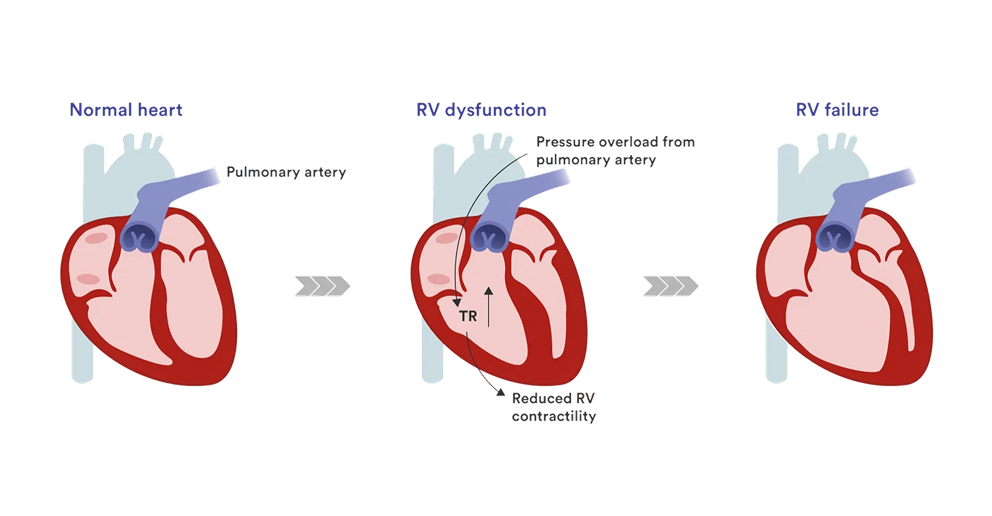
In PAH, increased pressure in the lungs places continuous strain on the right ventricle. Over time, this strain can lead to enlargement, reduced pumping efficiency, and ultimately right heart failure — the leading cause of death in PAH. Preserving right ventricular function is therefore a key goal in modern PAH management and clinical research.
Why continued innovation matters
Current therapies primarily target vessel dilation and symptom control. However, PAH involves structural changes in the blood vessels that continue to progress in many patients. There remains a need for therapies that not only relieve symptoms, but also address the underlying biological processes driving vascular remodeling and right heart strain.

PAH as a Rare Disease
PAH is classified as a rare (or orphan) disease in both the US and Europe. Rare disease designation reflects the limited number of affected individuals, but also the high unmet medical need and severity of the condition.
In many regions, therapies developed for rare diseases may qualify for specific regulatory incentives, including market exclusivity following approval, scientific and regulatory support and accelerated review pathways in certain cases.
These frameworks are designed to encourage innovation in areas where treatment options remain limited.
Learn more

Pipeline
Drug candidate CS1
CS1 is in development for the treatment of PAH. Preparations for a Phase IIb trial is ongoing.
Learn more