
August 05, 2026
Pulmonary arterial hypertension (PAH) is a serious and progressive disease where diagnosis is often delayed, and current treatments primarily manage symptoms rather than address disease progression. For patients, this results in a significant impact on both quality of life and future outlook. In this interview Hall Skåra shares his experience of living with PAH and insights from his involvement as a representative of patient organization PHA Europe & Global.
When were you diagnosed and how did it affect your daily life?
- I was diagnosed in 2005 at the age of 47, but it took several years to get there. Initially, test results appeared normal and I continued living as usual, even though I gradually became worse with increasing shortness of breath and fatigue. It was only when I met a specialist that the diagnosis could be confirmed – something that is unfortunately common, as it often takes years and multiple healthcare visits before receiving the correct diagnosis. When the diagnosis finally came, it had a dramatic impact on both me and my family, and I had to reduce my workload by half.
How would you describe the main challenges of living with PAH?
- It is a disease that affects life on many levels. Physically, it means no longer having the energy for things you once took for granted – shortness of breath and fatigue impact even simple daily activities. At the same time, there is a mental dimension to living with a chronic and serious disease that cannot be cured. Life changes completely, and you need to find a new way of relating to both everyday life and the future.
How do you view today’s treatment options?
- I have been fortunate to respond well to treatment and can live a relatively good life, but that is not the reality for everyone. Today’s treatments are not sufficient – they are often lifelong and focus more on managing the disease than actually affecting it. This means that the need for better treatment options remains significant.
What does the possibility of new treatments mean to you and other patients?
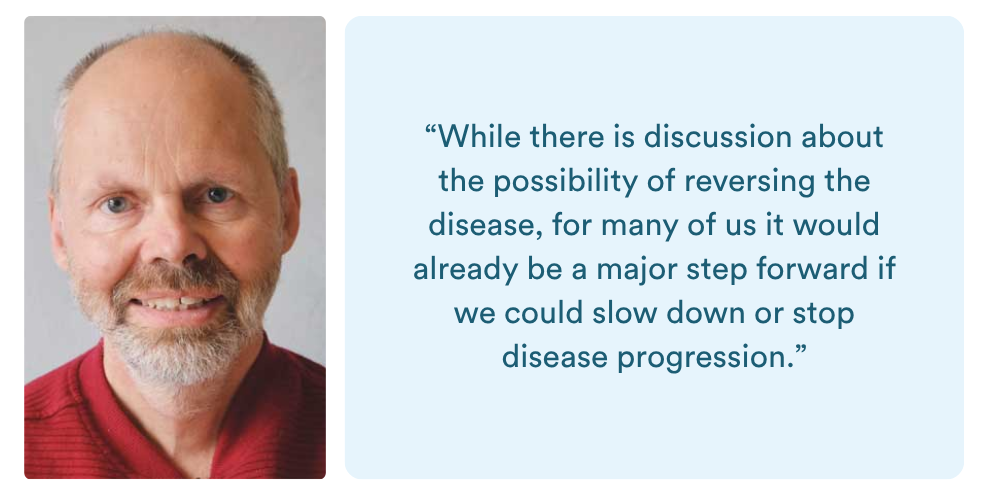
- It means hope. While there is discussion about the possibility of reversing the disease, for many of us it would already be a major step forward if we could slow down or stop disease progression. Stabilizing the disease and maintaining quality of life for longer would make an enormous difference for many patients.
What role do you think clinical research plays for patients with PAH?
- Clinical research is absolutely essential. For patients, it is what drives progress and creates hope for the future. Many are also willing to support and participate in clinical studies, precisely to help bring new treatments forward. It is particularly important to develop treatments that are not only effective but also well tolerated, as this would make a real difference in everyday life.
This interview was previously published in Cereno Scientific’s Annual Report 2025.